
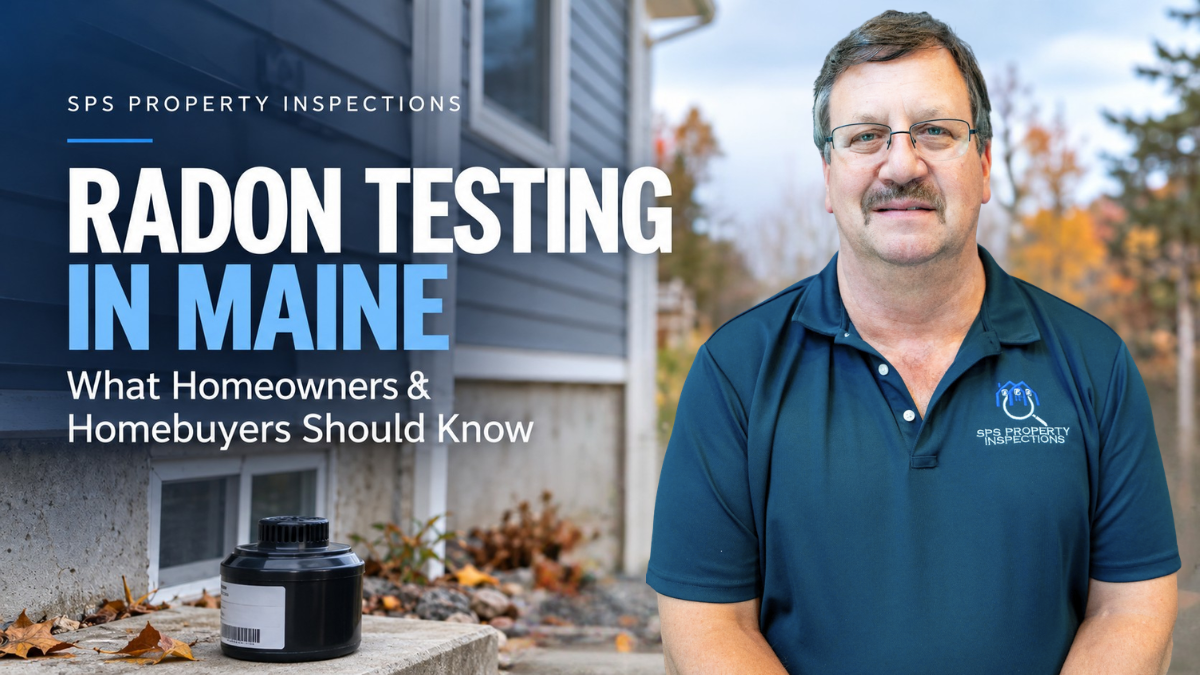
When we think about taking care of a home, most of us focus on the things we can see. We check the roof, keep an eye on the basement, maintain the heating system, and take care of repairs as they come up.
But what about something you can’t see, smell, or taste?
That’s where radon comes in.
Radon is a naturally occurring radioactive gas that can enter a home through small openings in the foundation, cracks in floors, and gaps around pipes. Because there’s no way to detect it with your senses, homeowners may have no idea it’s present without having their home tested.
At SPS Property Inspections, we believe understanding your home is just as important as maintaining it. With Maine’s colder months approaching, this is a good time to talk about why radon testing deserves a place on your home maintenance list.
What Is Radon, and Why Should Maine Homeowners Pay Attention?
Radon develops naturally in the ground and can enter buildings through openings in the foundation and other areas where the home meets the ground. When it accumulates indoors, long-term exposure can increase the risk of lung cancer.
Here’s something important to understand: radon isn’t limited to old houses, homes with basements, or properties in one particular part of Maine.
According to the Maine Center for Disease Control and Prevention, radon problems have been found throughout the state. At least 25% of homes tested in any part of Maine have radon problems.
That doesn’t mean every home has elevated levels. It means we shouldn’t assume a property is safe simply because of its age, location, or condition.
Even two homes right next to each other can have very different radon levels.
The only way to know what’s happening inside your home is to test it.
Why Fall Is a Good Time to Think About Radon Testing
As temperatures drop, we’re getting ready to spend more time indoors. Windows stay closed more often, heating systems begin running regularly, and the house starts preparing for another Maine winter.
It’s also a good time to consider your indoor air quality.
The Maine CDC notes that radon levels are typically higher during winter, making the heating season an important consideration when deciding when to test your home.
If you’ve never tested your home for radon, now is a good opportunity to explore your options. And if you’ve tested in the past, keep your results and discuss with a qualified radon professional whether another test is appropriate, particularly if you’ve completed renovations or made changes to your foundation or ventilation.
The goal isn’t to create unnecessary worry. It’s to make sure you have the information you need to make informed decisions about your home.
Buying a Home in Maine? Don’t Overlook Radon Testing.
Buying a home comes with plenty to think about. You’re looking at the location, evaluating the property’s condition, reviewing your budget, and imagining what life will look like once you move in.
It’s easy to focus on the visible details and overlook concerns that require separate testing.
Radon is one of those things.
A standard home inspection provides valuable information about the visible condition and operation of a property’s major components. However, you cannot determine the radon level simply by looking at a house.
That’s why radon testing is worth discussing during the home-buying process.
If you’re a buyer, ask whether the home has been tested, whether the results are available, and whether any previous elevated readings have been addressed.
We also encourage buyers to understand what happens during a professional inspection. If you’re preparing to purchase a property, our article, Why a Thorough Home Inspection Is Essential When Buying a Home in Maine, offers more insight into why having the right information before closing matters.
If you’re a real estate agent, helping your clients understand the role of radon testing can make the inspection process more informative. It’s another opportunity to encourage thoughtful questions and help buyers make decisions based on information rather than assumptions.
One important Maine-specific detail: when a property is for sale, radon testing must be performed by an independent, Maine-registered radon tester. Buyers and real estate agents cannot conduct the test themselves. You can find the details in the Maine CDC’s radon FAQs.
Already Own Your Home? Here’s When to Consider Testing.
Radon testing isn’t just for real estate transactions.
If you’re living in a home you’ve owned for years, it’s worth finding out whether radon has ever been tested and what the results were.
Consider looking into testing if:
- You’ve never had your home’s radon levels checked.
- You don’t know whether previous owners conducted a test.
- You’re planning to turn a basement or lower level into a frequently used living space.
- You’ve completed renovations that may affect the foundation or how air moves through your home.
- You have a private well and haven’t explored radon testing for your water.
That last point is especially worth noting. Radon can also enter indoor air from water, particularly in homes supplied by groundwater wells. The Maine CDC recommends that homes with wells test their water for radon, in addition to considering indoor air testing.
Radon in air and radon in water are separate testing considerations. Having one test performed doesn’t automatically tell you the results of the other.
If you’re unsure which type of testing is appropriate for your property, start by asking a qualified professional.
You can also review SPS Property Inspections’ services to learn more about the inspection and testing options we offer.
What Happens If a Radon Test Comes Back High?
First, don’t panic.
An elevated result doesn’t mean you need to walk away from a home or that the problem can’t be addressed. It means you’ve identified something that needs attention.
For indoor air, the U.S. Environmental Protection Agency recommends taking action to reduce radon levels at or above 4 picocuries per liter (pCi/L). Results below that level may still warrant further consideration, depending on the circumstances.
If your result is elevated, speak with a qualified radon mitigation professional about the appropriate next steps. Depending on the situation, a mitigation system can be installed to reduce radon levels, followed by testing to evaluate the results.
For buyers and sellers, clear communication is especially important. Radon findings should be discussed openly so everyone understands the results, any recommended work, and the steps being taken.
A test result is information you can use to make a decision. It’s much better to understand the issue and explore solutions than to leave important questions unanswered.
For additional information, visit the Maine CDC’s radon guidance.
A Few Common Questions About Radon
Can I tell whether my home has radon by its smell or appearance?
No. Radon is invisible and has no smell or taste. A visual inspection cannot establish the radon level in a home.
Can a newer home have radon problems?
Yes. Both new and older homes can have elevated radon levels. The age of a property alone doesn’t tell you whether testing is needed.
If my neighbor’s home tested low, does that mean mine will, too?
Not necessarily. Radon levels can vary significantly from one home to another, even on the same street.
If my home tested below the action level once, am I set for life?
Not necessarily. Radon levels can change, and results may vary with conditions and timing. Keep your test records and consult a qualified radon professional about whether repeat testing is appropriate.
Taking Care of a Home Starts With Understanding It
One of the things we value most at SPS Property Inspections is helping homeowners understand what they’re looking at and why it matters.
Whether you’re preparing to buy your first home, getting a property ready to sell, or simply taking better care of the house you’ve lived in for years, having the right information makes a difference.
Radon is a good example of why home maintenance goes beyond what you can see. Sometimes protecting your home and the people in it means taking a closer look at something you wouldn’t otherwise know was there.
If you’d like to learn more about our approach and the experience behind our inspections, visit our About SPS Property Inspections page.
And because radon is only one part of maintaining a home, you may also find our guide to 8 Home Problems Maine Homeowners Should Catch Before Winter helpful as the colder months approach.
Have Questions About Radon Testing for Your Home?
Whether you’re a homeowner with questions about testing, a buyer preparing for an inspection, or a real estate agent helping a client navigate the process, we’re here to help you understand the next steps.
At SPS Property Inspections, we work with homeowners, buyers, sellers, and real estate professionals throughout Maine. We believe in providing clear information and practical guidance so you can make informed decisions about your property.
Don’t leave important questions about your home unanswered. Get in touch with SPS Property Inspections to discuss your property and the testing options appropriate for your situation.