
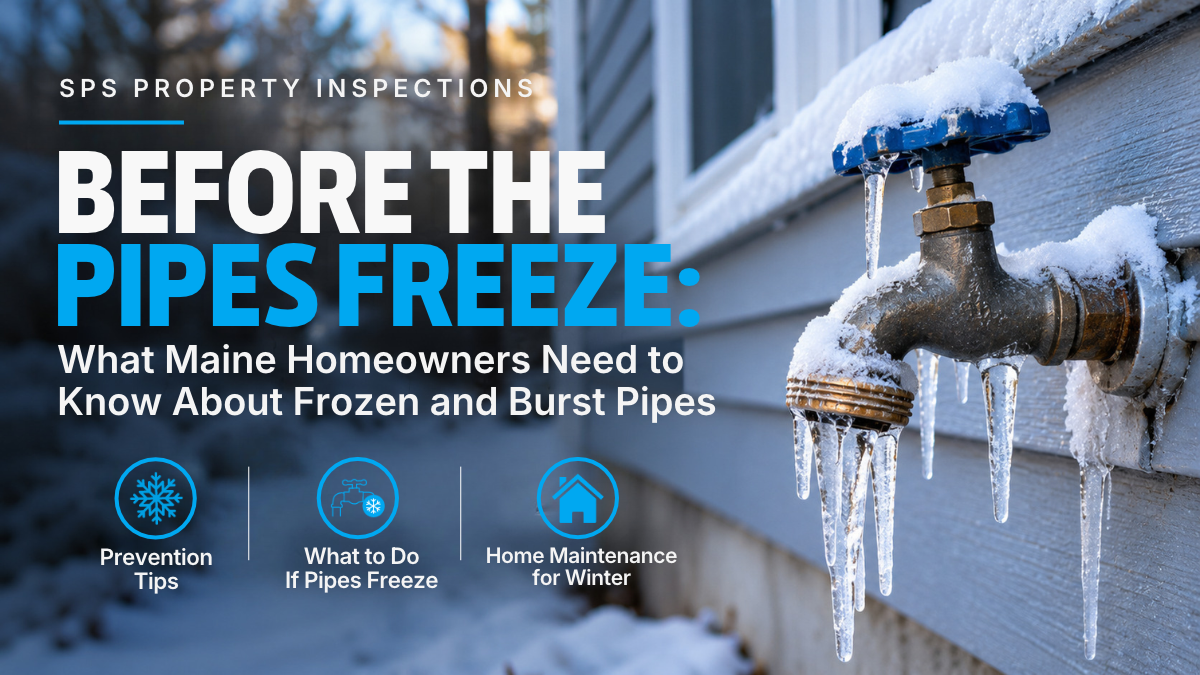
There’s a certain point every year in Maine when we start paying a little more attention to the weather forecast.
The mornings get colder, the temperatures begin dipping overnight, and before long, we’re dealing with the kind of cold that makes you think twice about stepping outside.
For homeowners, this is also the time to start thinking about something that can cause a surprising amount of damage during the winter months: frozen pipes.
It’s one of those problems that can start quietly. You might notice a faucet isn’t running quite like it should, or perhaps there’s no water coming out at all. And while a frozen pipe might seem like a small inconvenience at first, it can become a much bigger problem if the pipe cracks or bursts.
We’ve seen how important it is to stay ahead of home maintenance, especially here in Maine. A little preparation before the temperatures really drop can save homeowners a lot of headaches later.
So, before winter settles in, let’s talk about what causes pipes to freeze, where the trouble spots usually are, and what you can do to protect your home.
Why Do Pipes Freeze in the First Place?
Water expands when it freezes. When water inside a pipe turns to ice, the pressure can increase enough to damage the pipe or cause it to burst.
This is especially common in areas of a home that don’t receive enough heat or insulation.
Some of the most vulnerable locations include:
- Pipes running along exterior walls.
- Basements and crawl spaces.
- Unheated garages.
- Attics and other unfinished spaces.
- Plumbing near windows, doors, and areas with noticeable drafts.
- Pipes where the water supply enters the home.
Here’s something homeowners sometimes don’t realize: a pipe doesn’t have to be completely exposed to outdoor temperatures to freeze. A small opening that allows cold air into an area can make a difference, particularly during an extended cold spell.
And when a pipe finally thaws, the damage may become apparent only after water starts leaking into the surrounding area.
6 Things Maine Homeowners Should Do Before Winter
The good news is that there are several practical steps you can take to reduce the risk of frozen pipes.
You don’t necessarily need a major renovation or an expensive project. Sometimes it’s the smaller maintenance items that make the biggest difference.
1. Insulate Exposed Pipes
Start by looking at the plumbing in your basement, crawl space, garage, and other unfinished areas.
If you find exposed water pipes, consider having them properly insulated using materials designed for plumbing.
Pay particular attention to pipes near exterior walls or areas that aren’t consistently heated.
If you’re unsure which pipes need additional protection, a qualified plumber can help evaluate the situation and recommend the appropriate materials.
2. Disconnect Your Garden Hoses
This is one of the easiest things to forget when the weather starts changing.
Before freezing temperatures arrive, disconnect your garden hoses from outdoor faucets.
If your home has a separate shutoff valve for exterior faucets, turn it off and drain the remaining water from the line according to the plumbing setup.
Leaving a hose connected can trap water and increase the risk of freezing in the pipe leading to the outdoor faucet.
It’s a small task, but one worth adding to your November maintenance list.
3. Seal Openings That Let Cold Air In
Take a look around the areas where plumbing enters your home.
Check for gaps around pipes, openings in the foundation, damaged weather stripping, and other places where cold air could reach water lines.
Even small openings can allow cold air to move into areas that should stay warmer.
Properly sealing these gaps can help protect vulnerable plumbing while also improving your home’s overall comfort.
4. Know Where Your Main Water Shutoff Is
This is something every homeowner should know before an emergency happens.
If a pipe bursts, being able to shut off the main water supply quickly can help limit the amount of water entering your home.
Find your main shutoff valve and make sure you understand how it operates.
If the valve is difficult to access, damaged, or you’re unsure how to use it, have a plumber take a look before winter.
You don’t want to be searching for it while water is spreading across your basement floor.
5. Keep Your Home Warm, Even When You’re Away
If you’re planning to travel during the winter or leave your property vacant for an extended period, don’t simply turn off the heat to save energy.
The Maine Emergency Management Agency recommends keeping the thermostat at no lower than 55°F when you’re away during freezing weather.
It’s also a good idea to arrange for someone to check the property regularly to make sure the heating system is operating properly.
For seasonal homes or properties that will remain unoccupied, speak with a qualified plumber about whether the plumbing system should be properly winterized.
The right approach depends on the property’s plumbing, heating setup, and how long it will be vacant.
6. Pay Attention to Unusual Changes in Water Flow
During particularly cold weather, pay attention to how your faucets are operating.
If you notice that water is flowing more slowly than usual or a faucet suddenly produces only a trickle, a frozen pipe could be the reason.
Don’t ignore it and assume the problem will resolve itself.
The sooner a potential freeze is addressed, the better the chance of avoiding additional damage.
What If You Think Your Pipes Are Already Frozen?
First, don’t panic, but don’t ignore it either.
If you suspect a frozen pipe, here are a few things to keep in mind:
- Keep the affected faucet open slightly so water can flow as the ice begins to melt.
- If you can safely access the frozen section, use a hair dryer or an electric heating pad to apply gentle heat.
- Keep the area around the pipe warm.
- Check for signs of leakage as the pipe thaws.
- If you cannot locate the frozen section, cannot safely access it, or suspect a burst pipe, contact a licensed plumber.
Never use an open flame, blowtorch, or propane heater to thaw a frozen pipe. These methods can damage plumbing and create a serious fire hazard.
If a pipe has already burst, shut off the main water supply as quickly as possible, provided it is safe to do so. Keep away from standing water near electrical equipment and contact a qualified plumber.
For more detailed guidance, the Maine Emergency Management Agency has a helpful guide on preventing and thawing frozen pipes.
Buying or Selling a Home This Winter? Don’t Overlook the Plumbing.
Frozen pipes aren’t just a concern for people who have lived in their homes for years.
They can also become an issue during real estate transactions, especially when dealing with vacant properties, seasonal homes, or houses that have been sitting on the market during colder months.
If you’re purchasing a home, pay attention to the condition of exposed plumbing, the insulation in unfinished areas, and whether there are signs of previous water damage.
Look for water staining, damaged flooring, musty odors, or other indications that a leak may have occurred.
If you’re a seller or real estate agent, making sure a property is properly heated and monitored during the winter is equally important.
A vacant home can be particularly vulnerable if the heating system stops working or the property isn’t checked regularly.
This is also why having a professional home inspection matters. Understanding the condition of a property’s plumbing, insulation, heating system, and other major components can help buyers make more informed decisions.
It’s much better to identify concerns before closing than to discover them after moving in.
Don’t Forget the Rest of Your Home
While frozen pipes deserve attention this time of year, they’re only one part of getting a property ready for a Maine winter.
It’s also worth checking your heating system, attic insulation, ventilation, gutters, and areas where moisture may be entering the home.
If you haven’t already, take a look at our previous guide, Before the First Freeze: 8 Home Problems Maine Homeowners Should Catch This Fall. It covers several other areas that deserve attention before winter arrives.
And if you’re interested in understanding what a professional inspection covers, visit our SPS Property Inspection Services page to learn more.
A Little Preparation Can Prevent a Much Bigger Problem
One thing we’ve learned over the years is that homeowners don’t always realize how much difference routine maintenance can make.
It’s easy to put off insulating a few pipes, sealing a small opening, or checking the heating system when everything seems to be working just fine.
But winter has a way of finding the areas of a home that need attention.
Our goal at SPS Property Inspections has always been to help homeowners understand their properties and feel more confident about taking care of them.
Whether you’re buying a home, preparing to sell, or simply trying to stay ahead of seasonal maintenance, knowing what to look for is a good place to start.
And remember, you don’t have to wait until something goes wrong to take a closer look.
Need a second set of eyes on your home before winter?
SPS Property Inspections works with homeowners, buyers, sellers, and real estate professionals throughout Maine. If you have questions about your property’s condition or would like to learn more about our inspection services, we’d be happy to help.
SPS Property Inspections
Serving Lewiston, Auburn, and communities throughout Maine.
Phone: 207-890-4848
Email: SPSPropertyInspections@gmail.com
Take care of the little things now, and you’ll have a lot less to worry about when winter really settles in.